Refrigerant Tracking
Refrigerant Tracking gives HVAC teams a dedicated log for refrigerant purchases, charges, recoveries, disposals, and transfers. Use it to keep EPA 608-aligned transaction records, see pounds handled year to date, and monitor cylinder inventory from the same workspace technicians and office staff already use.
When to use this
Use Refrigerant Tracking when you need to:
- Record how many pounds of each refrigerant type were purchased, charged to jobs, recovered, disposed, or transferred.
- Tie refrigerant activity back to the technician, job or supplier, cylinder serial number, and notes.
- Review year-to-date purchase, charge, recovery, and disposal totals without building a separate spreadsheet.
- Watch on-hand cylinder inventory and flag low-stock refrigerants before a crew runs short.
Before you start
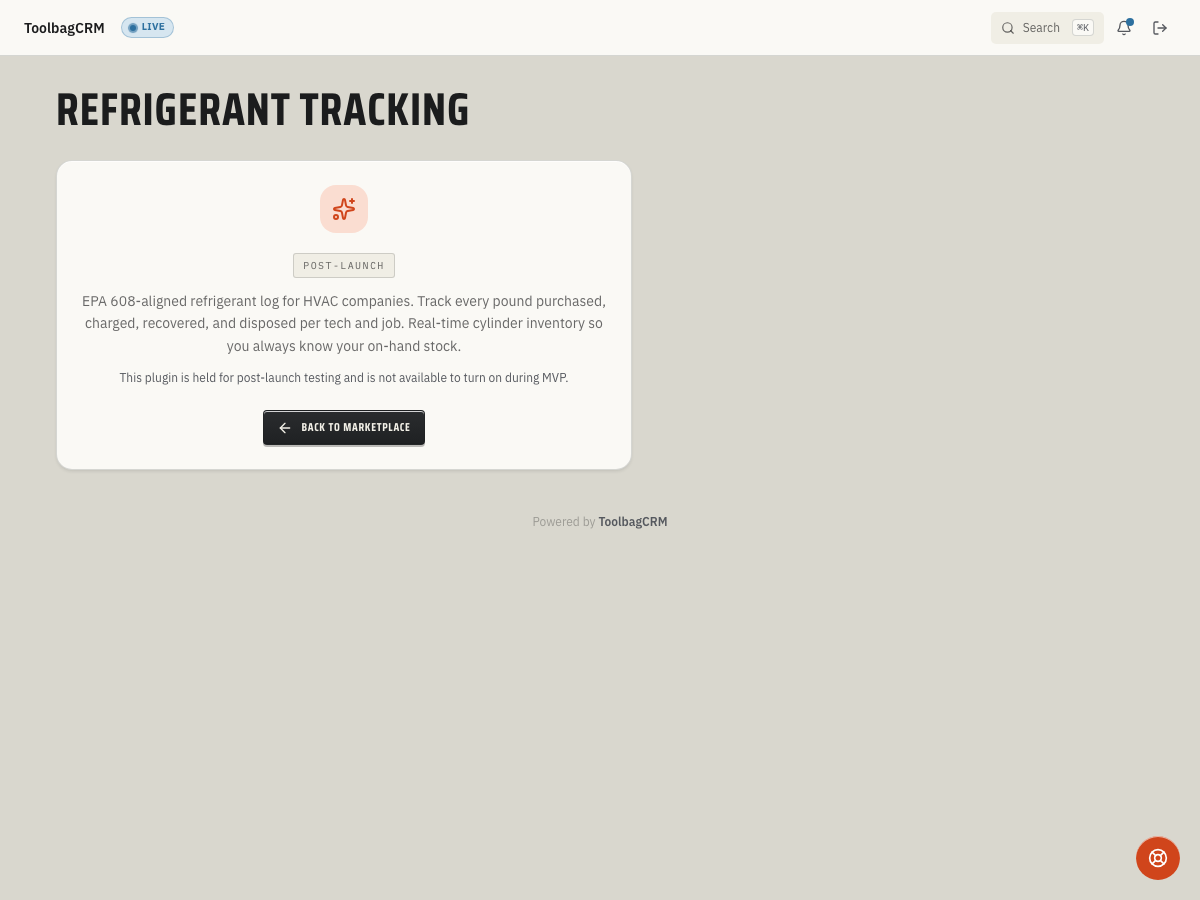
- Confirm Refrigerant Tracking is included in your plan and enabled under Settings → Features.
- Make sure the Team feature is enabled if you want technician names on each transaction.
- Decide whether your office wants technicians required on every transaction and what low-cylinder threshold should trigger a warning.
- Decide whether your EPA reporting year should stay at the default January 1 start or use another month/day for your records.
- Gather the refrigerant types your company handles most often, such as R-22, R-410A, R-454B, or any custom type you need to track.
Settings
Open Refrigerant Tracking, then choose Plugin settings to configure:
- Refrigerant types — record the refrigerant types your team tracks for reference (such as R-22, R-410A, or R-454B). The transaction form still accepts any type when a one-off or custom refrigerant needs to be logged.
- Low-cylinder threshold (lbs) — set a pound level that flags inventory rows when net on-hand pounds are at or below that amount. Set the threshold to
0to turn off the low-stock alert. - Require a technician on every transaction — turn this on if each log entry must identify the responsible team member.
- EPA reporting year start — store the month and day your reporting year starts in
MM-DDformat. The setting defaults to01-01; current year-to-date totals still use the calendar year.
Log a refrigerant transaction
- Open Refrigerant Tracking.
- Select Log Transaction.
- Choose the transaction type: Purchase, Charge, Recovery, Disposal, or Transfer.
- Select the refrigerant type. Choose Other if the exact type is not in your standard list.
- Enter the pounds handled. The form requires a value greater than zero.
- For purchases, enter the supplier. For charge, recovery, disposal, or transfer entries, enter the job or location when applicable.
- Add the technician, cylinder serial number, and notes such as system or EPA 608 details.
- Save the transaction.
Purchases and recoveries increase on-hand inventory. Charges, disposals, and transfers reduce on-hand inventory.
Review transactions and inventory
The main page has two views:
- Transaction Log — shows each entry with date, type, refrigerant, pounds, technician, job or supplier, cylinder number, and edit/delete actions.
- Inventory — summarizes each refrigerant type by purchased, recovered, charged, disposed, transferred, and net on-hand pounds.
Use the type tabs to filter transactions by Purchase, Charge, Recovery, Disposal, or Transfer. You can also filter by refrigerant type or search by refrigerant, technician, job, or supplier.
Tips
- Log purchases before technicians start recording charges so inventory has an accurate starting point.
- Use consistent technician names and cylinder serial numbers so search stays useful.
- Review the Inventory tab weekly during busy HVAC seasons.
- Keep notes factual and audit-friendly: system identifier, service context, and any EPA 608 details your company needs to retain.
Troubleshooting
The form will not save
Check that the refrigerant type is present and pounds is greater than zero. If your company has enabled Require a technician on every transaction, enter a technician before saving.
Inventory shows low stock
A refrigerant is flagged low when its net on-hand pounds are at or below the low-cylinder threshold in plugin settings. Increase inventory by logging a purchase or recovery, or adjust the threshold if it is too sensitive for your workflow.