Pest Control (Idea)
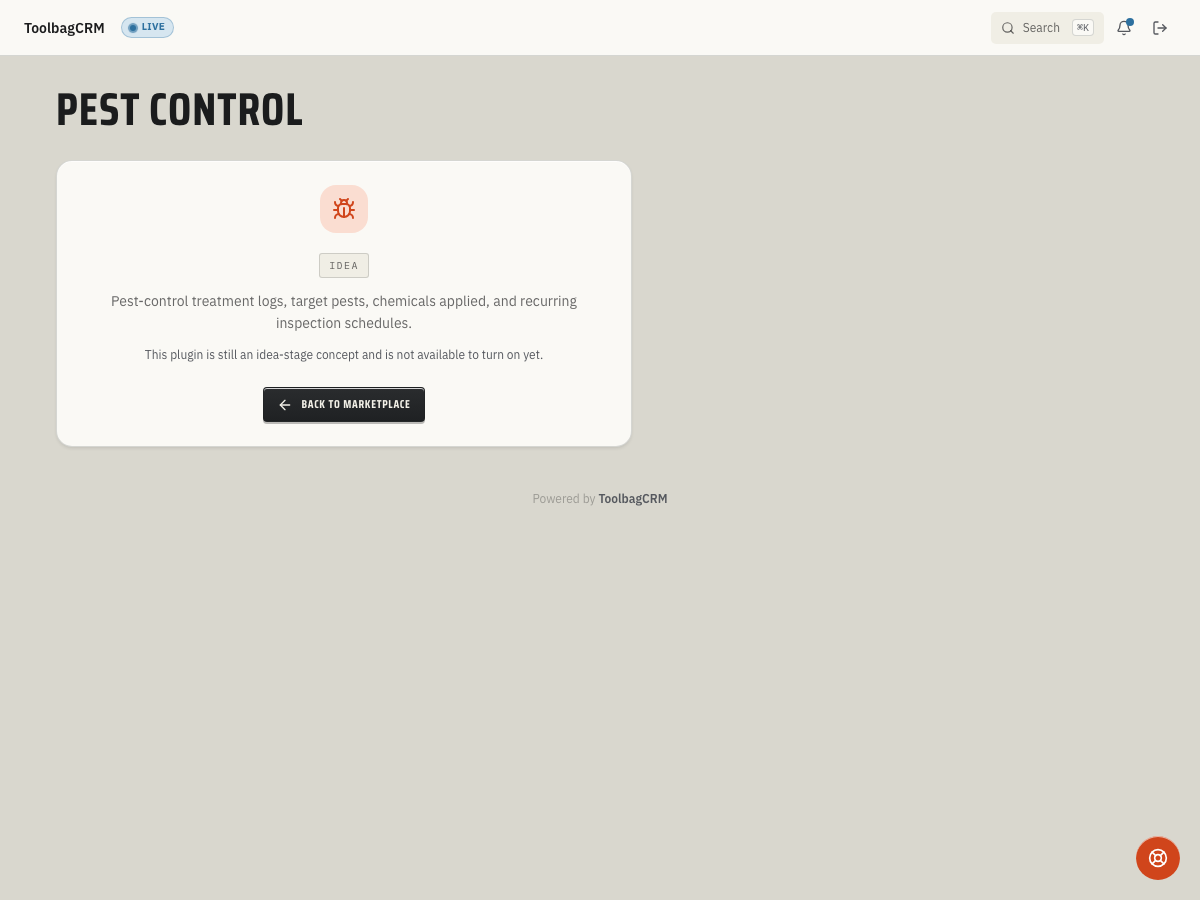
Idea stage: Pest Control is a concept and is not available to turn on yet. This guide describes planned behavior and may change before release.
Pest Control will help structural pest teams track recurring service routes, bait stations, treatment logs, target pests, and compliance-ready service records without forcing that work into a generic job note.
When to use this
Use Pest Control when your business needs to manage recurring pest routes, commercial station maps, pesticide application records, and customer sightings between visits.
It is aimed at pest-control teams that need to answer questions like:
- Which bait stations or traps were inspected at this property?
- What product was applied, by whom, and under which applicator license?
- Which pests are active, and is the severity increasing?
- When is the next monthly, bimonthly, or quarterly visit due?
- Can the customer receive an IPM or service-ticket report after the visit?
Before you start
Because the plugin is not generally available yet:
- Confirm with ToolbagCRM that Pest Control is included in your rollout or preview plan.
- Make sure Customers and Jobs are enabled, since pest profiles and service visits attach to customer/job records.
- Decide whether your team also needs property records, applicator credential details, or pesticide product catalogs ready before rollout.
- Do not expect a finished settings or workflow screen yet; Pest Control remains at the idea stage until ToolbagCRM enables the active workspace for your account.
Planned workflow
1. Create pest profiles for serviced properties
A pest profile is planned to store the customer's property type, recurring interval, target pests, entry notes, and chemical-sensitivity notes. Use it as the home base for recurring pest service history instead of scattering those details across separate job notes.
2. Maintain stations and traps
For commercial accounts, Pest Control is designed to track each station or trap with a station number, type, location description, installed date, and active/inactive status. During visits, technicians should be able to record whether each station was inspected, serviced, damaged, missing, removed, or showing activity.
3. Log treatment records
Treatment records are planned to capture the applied product, EPA registration number, application method, quantity, target pests, applicator, license number, weather conditions when needed, and re-entry interval. These records are intended to support customer reporting and regulatory review.
4. Track sightings and escalations
Customer-reported sightings between visits are planned to create a structured record with sighting date, pest, location, severity, reporter, and escalation status. Higher-severity activity can then drive follow-up work instead of staying buried in messages.
5. Produce customer and compliance reports
The planned reporting surface includes IPM reports, customer service tickets, and state applicator exports. Treat these as idea-stage capabilities until the idea stage exposes the finished UI.
Rollout notes
When Pest Control becomes available, start with a small rollout:
- Prepare this step for rollout; Pest Control is not available to enable while it remains at the idea stage.
- Confirm customer and job records are clean enough to attach pest profiles.
- Add your most common property types, target pests, pesticide products, and recurring service intervals.
- Pilot one route or commercial account before moving every recurring stop into the plugin.
- Review report output with your compliance lead before relying on it for regulatory submissions.
Tips
- Start with high-value commercial accounts where station maps and repeat visits create the most operational friction.
- Keep product names, EPA registration numbers, and applicator license records current before rollout.
- Train technicians to record severity and station status consistently so trend reports are useful later.
- Keep customer-facing IPM reports plain-English; save regulatory detail for the compliance export when possible.
Troubleshooting
I do not see Pest Control in the app
Pest Control is currently marked as idea stage. If your account is not part of the preview, the route may be hidden or may show only a placeholder.
I need to track pest work today
Until the plugin is available, continue using jobs, notes, documents/photos, and any existing recurring-service process your team has approved. Avoid documenting Pest Control as an active workflow until your account has the released workspace enabled.
Applicator or pesticide reporting requirements vary by state
Use your local compliance process as the source of truth. The planned Pest Control reports are intended to help with recordkeeping, but final regulatory submission requirements can vary by state and by license type.